DISTANT FIRES
October 23, 2026–December 28, 2026
Jan Dörre
Galerie Leuenroth
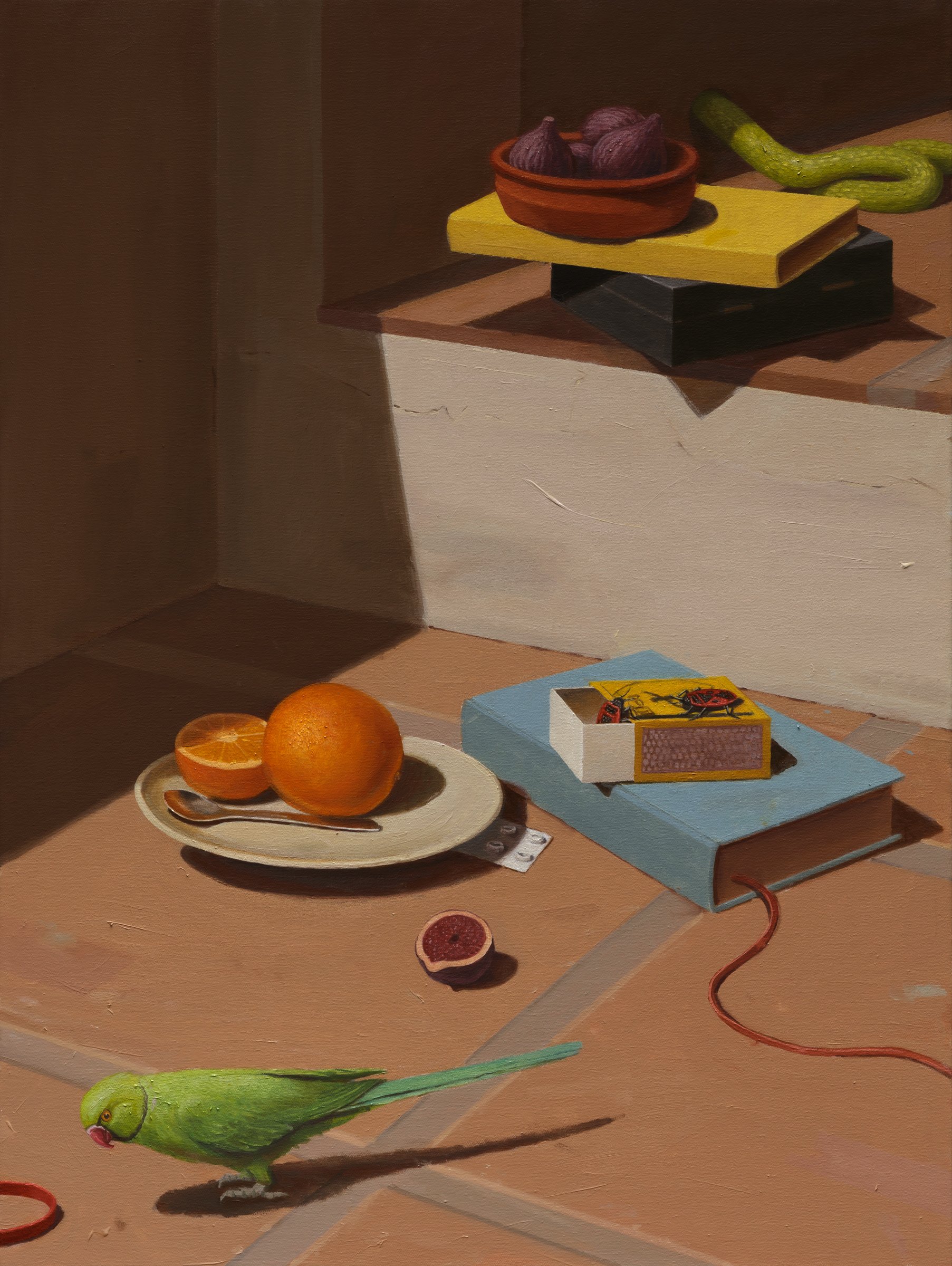
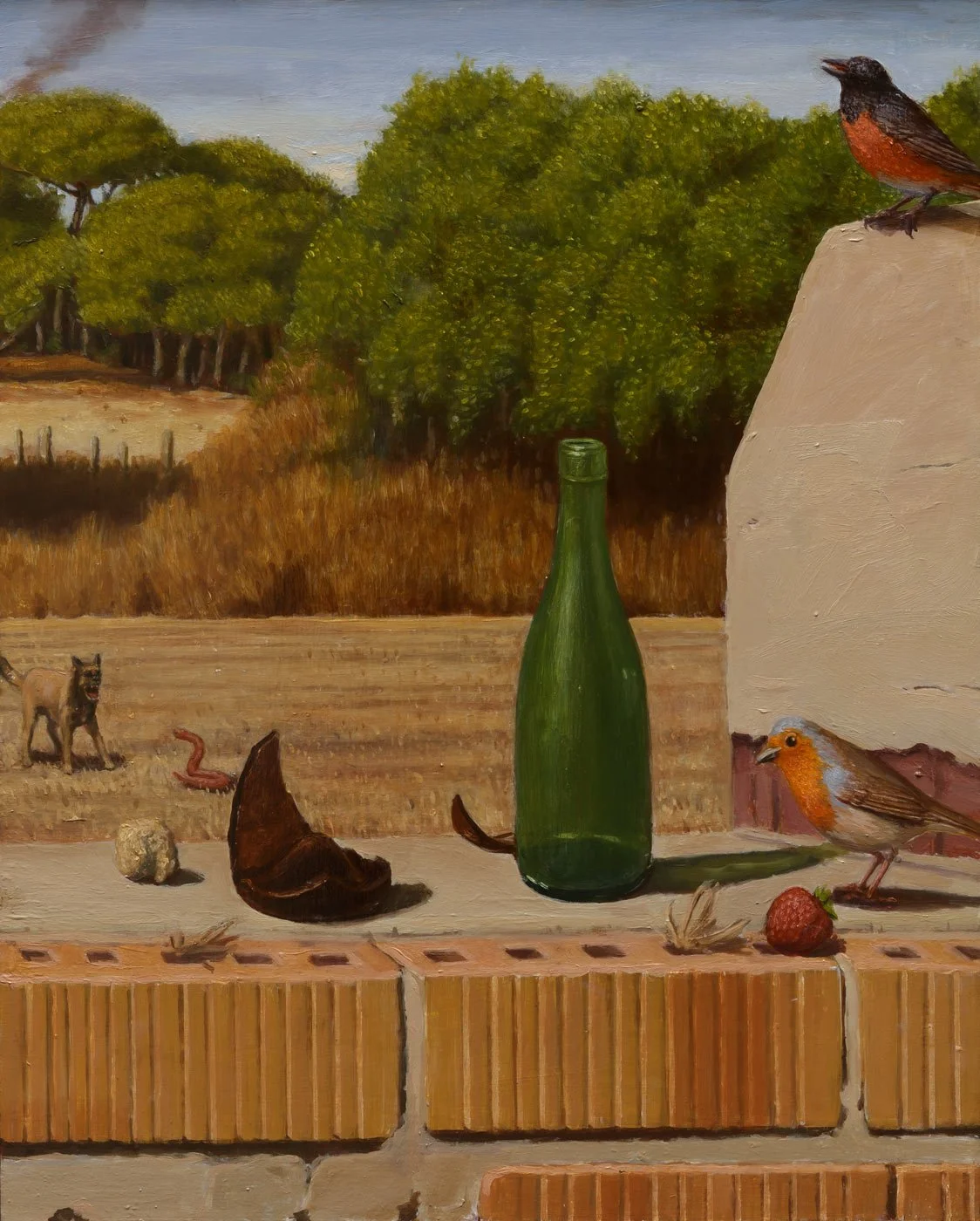
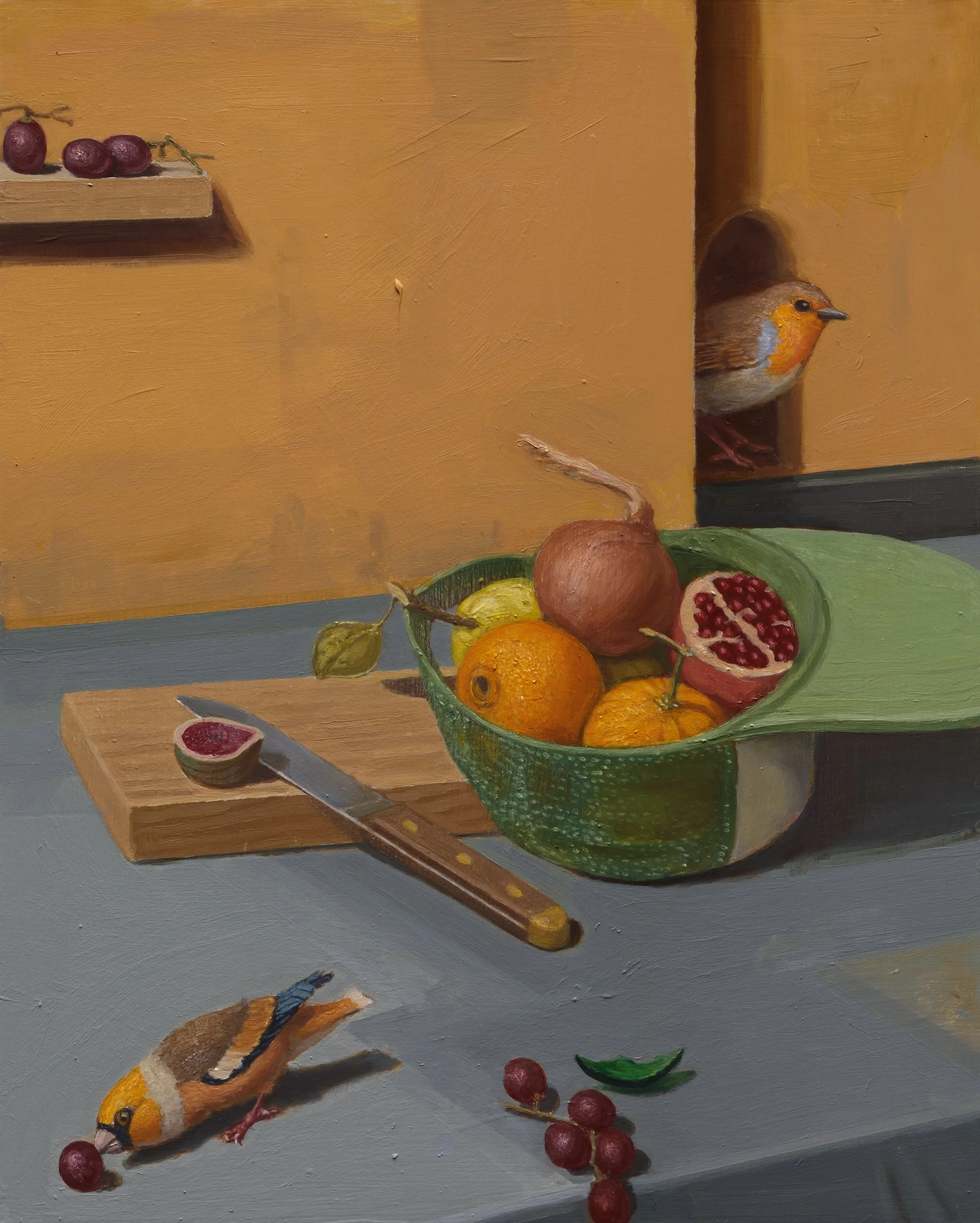
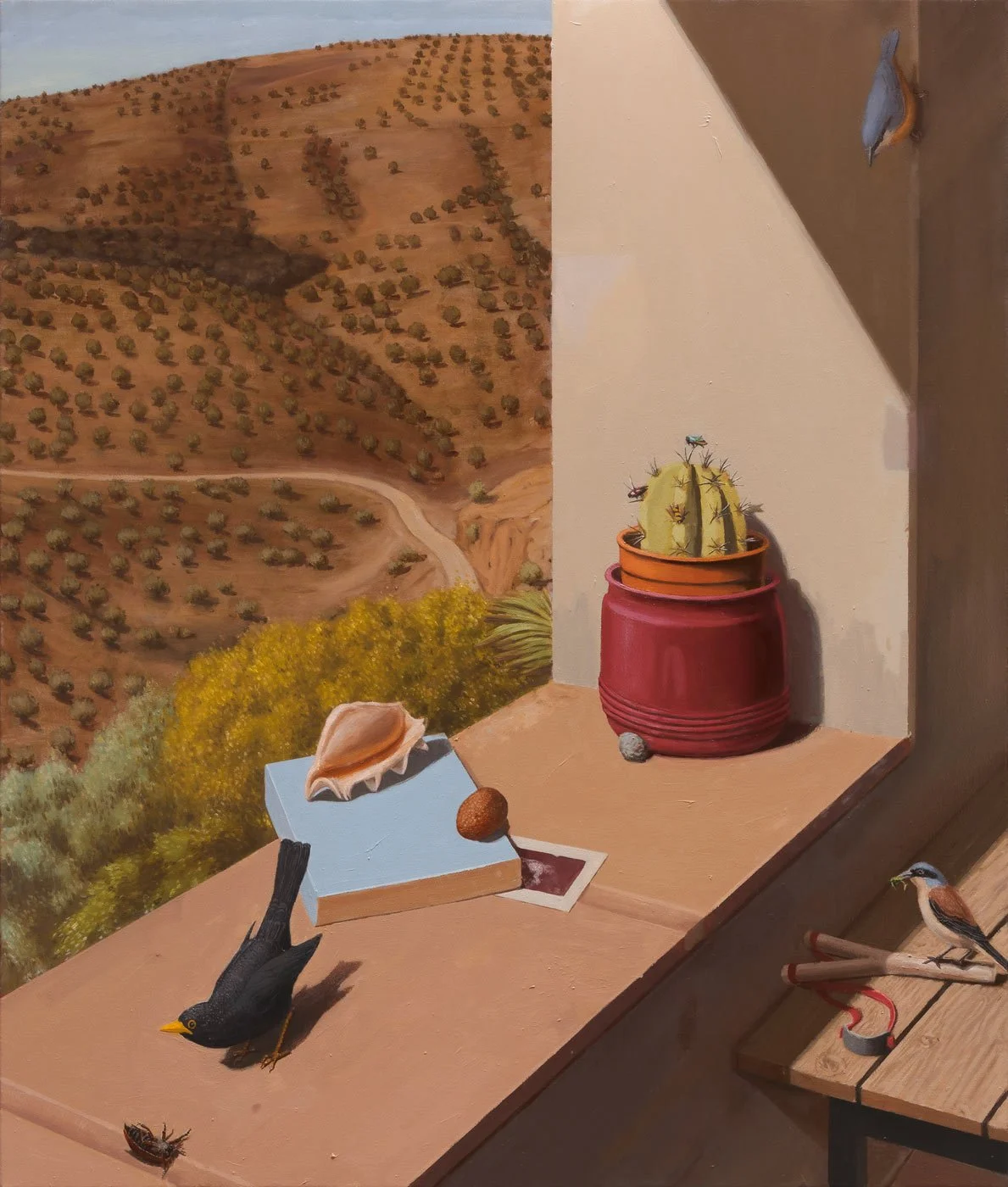
Jan Dörre draws deeply from European art history. He cultivates the technique of Old Master painting, which perfectly combines his keen powers of observation with his commitment to richly detailed composition. Furthermore, he is committed to the time-honored genreof still life, which develops its narrative through the skillful combination of symbolically charged objects. All of this is achieved without an authorial authority to moderate these interpretations. Consequently, the pictorial program is accessible only to those who are able to decipher and synthesize this visual language. To such viewers, however—in keeping with the Christian canonical tradition—a guide promising salvation unfolds. In the modern era, however, the genre claims the right to its own code. While it retains attributions, it secularizes them or reappropriates them. A universally valid set of rules for interpreting the depicted objects as mediators of overarching thematic complexes is thus abolished. From now on, the viewer’s own power of association is called upon.
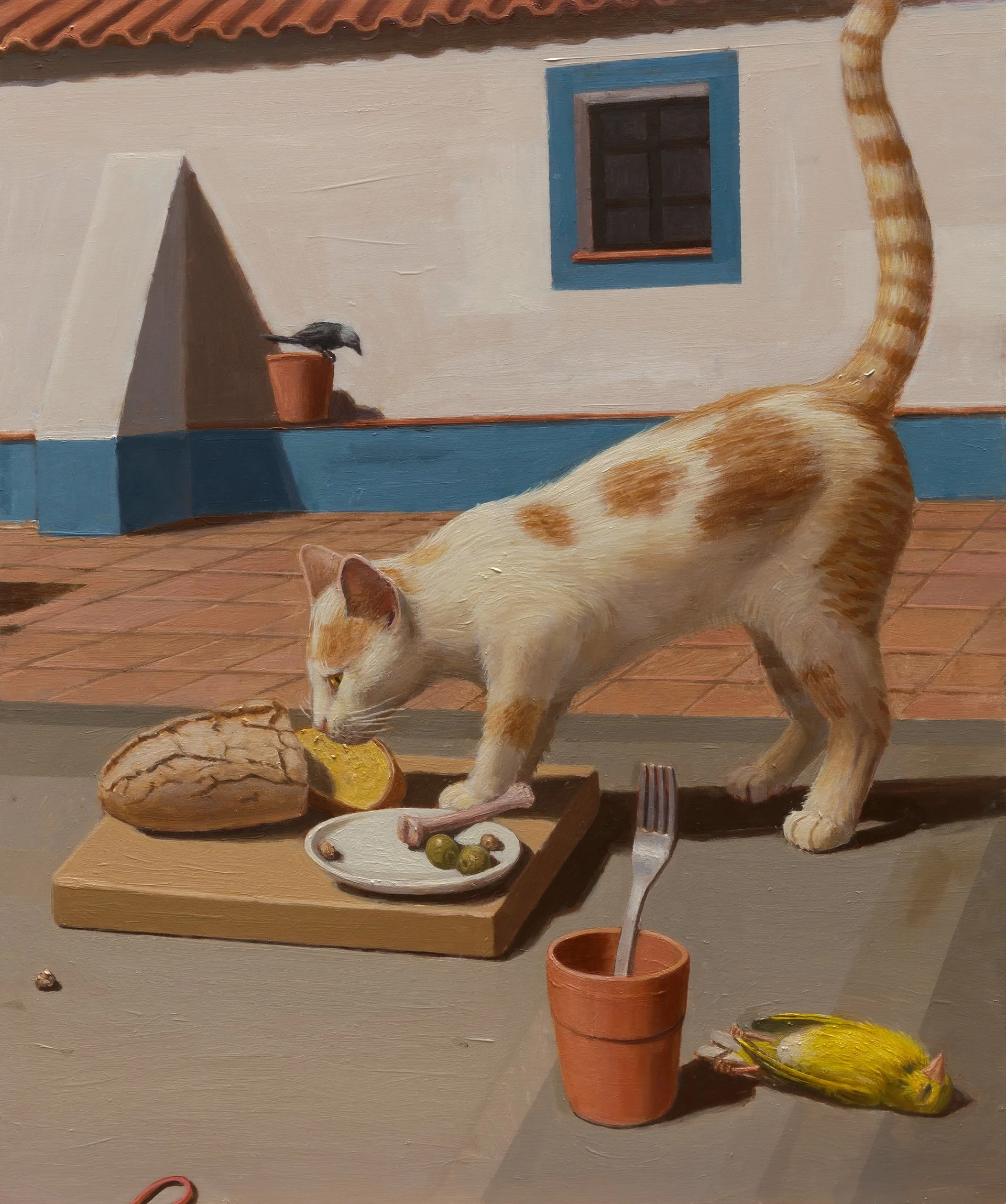
Or one might dare to shift one’s perspective and immerse oneself in Jan Dörre’s still lifes as if in a play. For “still” by no means implies lifelessness, but “merely” the exclusion of human figures from the scene. And so Jan Dörre sets the stage for animals—primarily birds, but also cats, reptiles, and insects. Landscape and architectural details transport the viewer to specific times and places. Here, for instance, the afternoon sun shines pleasantly down on a terracotta-tiled terrace, adjacent to which stands a white-painted house wall with blue trim at the base and “Window to the Courtyard” (2025). A sense of cozy languor permeates the Mediterranean atmosphere. On a dining table set with greige-colored linens, a cat sniffs at the remains of a typical local snack consisting of bread, olives, and a meatless bone. A fork juts out of a cup, its prongs aggressively displaying their potential to cause injury. The mood changes abruptly. And now one also spots the reclining canary-yellow bird with its eyes closed. Is it merely in a state of shock, or is the idyll turning into a crime scene?
Meanwhile, in “Milchkrug” (2026), an intimate drama unfolds: Against a pastel-yellow wall, two books are stacked one on top of the other on an old-rose background, followed by a light-yellow milk jug dotted with blue. Perched atop it is a male finch, observing the heated scene at his feet: To his left, a pair of stag beetles faces off—their antlers raised high. The distinctly shaped seashell lying nearby leaves no doubt as to the subject of their dispute. Yet it remains unclear whether they have reached an agreement or are still fighting it out. Love and war—the stuff of world literature. (Antje Kraus)
Jan Dörre(born in Arnstadt in 1967) studied painting and graphic arts under Professor Sighard Gille at the Academy of Graphic Arts and Book Design from 1991 to 1996. He then completed the master’s program from 1996 to 1999. His works are included in numerous collections, including the Museum of Fine Arts, Leipzig; the Von der Heydt Museum, Wuppertal; the Drents Museum, Assen (NL); and the Albertina Modern, Vienna (AT). Since 1996, he has regularly h Exhibitions s both in Germany and abroad, including solo exhibitions at the Tuttlingen City Gallery, the Emsland Museum at Clemenswerth Castle, the Rüsselsheim Art Association, the Städtische Galerie im Leeren Beutel in Regensburg, and most recently at the Münsterland Art Association. Jan Dörre lives and works in Leipzig.
Galerie Leuenroth
Fahrgasse 15,
60311 Frankfurt am Main
Email: info@galerieleuenroth.de
Phone: +49 175 5617654