
How do we want to live?
June 3, 2026 – October 3, 2026
Heike Baranowsky, Olivo Barbieri, Astrid Busch, Beate Gütschow, Jitka Hanzlová, Dieter Huber, Peter Hutchinson, Talisa Lallai, Lilly Lulay, Klaus Merkel, Karina Nimmerfall, Andrea Pichl, Eyal Weizman, and Christian Nicolas
DZ Bank Art Foundation
“How do we want to live?” With this central question, the DZ BANK Art Foundation’s exhibition, running from June 3 to October 3, 2026, turns its attention to how we live together in the city. Against the backdrop of current urban development projects, the exhibition brings together artistic perspectives on architecture, communal spaces, nature, and the people of the city. What do we need to collaboratively design spaces—in all their diversity—so that we can live together more harmoniously? People in major cities across Germany, Europe, and the world are concerned not only with the housing shortage and the affordability of housing, but also with how to foster a sense of community and create a livable environment.
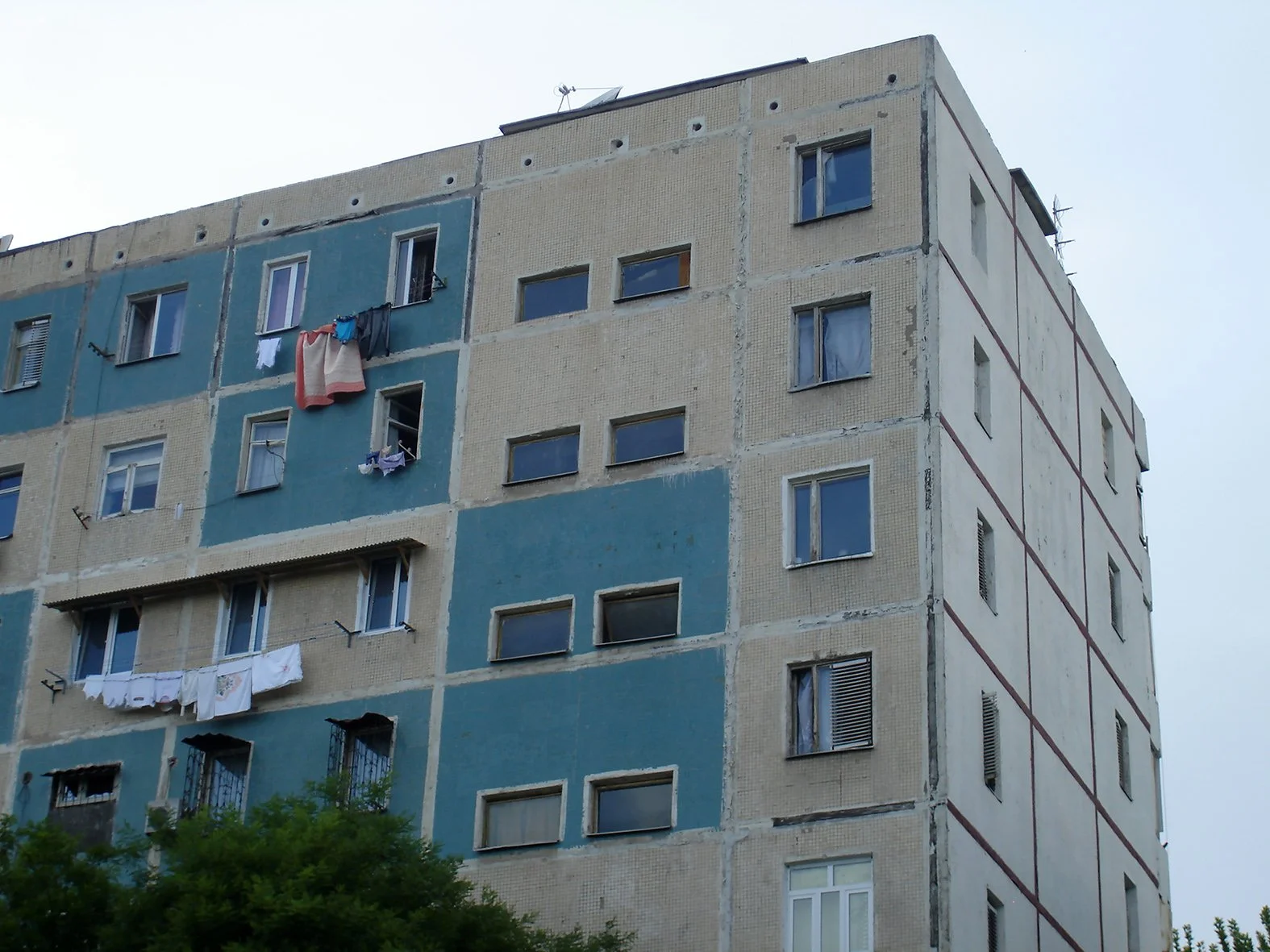
Four installation-based works form the centerpiece of the exhibition. They explore precisely these questions. Astrid Busch (*1968 Krefeld, FRG) was commissioned by the Art Foundation to examine “New Frankfurt,” which celebrated its 100th anniversary in 2025. Karina Nimmerfall (*1971 Deggendorf, FRG) turns her attention to the various housing estates of “Red Vienna” (1919–1934), which to this day allow for moderate rent increases. Moving between the city center and the outskirts, Heike Baranowsky (b. 1966, Augsburg, FRG) explores the Paris area, whereas Andrea Pichl (b. 1964, Haldensleben, GDR) brings together prefabricated housing complexes not only from the former GDR.
All of these perspectives demonstrate how closely architecture and urban development are linked to social issues. Historical, political, and social housing concepts continue to shape our major cities to this day. They prompt us to rethink how we live together in the city: What conditions do we need to collaboratively design spaces that embrace diversity so that we can live together harmoniously? Urban planning solutions influence our sense of comfort; they determine where we come together and where a sense of community emerges. Cooperative models, in which a business is run collectively, can demonstrate alternative solutions for financing housing that enable social and economic participation.
Contact:
Claudia Haevernick
claudia.haevernick@kunststiftungdzbank.de