mugwort
January 16, 2026 – March 7, 2026
ISABELLE DUTOIT, YVETTE KIESSLING, TANJA SELZER
Galerie Leuenroth
Artemisia presents drei artistic positions of Galerie Leuenroth with Isabelle Dutoit, Yvette Kießling, and Tanja Selzer. This constellation is a novelty. The title hints at the level on which they meet in all their diversity: their turn toward nature. Each oeuvre confidently asserts itself in one of the most traditional genres in art history. When viewed in relation to one another, the perspectives shift in an intriguing way. The gaze wanders between sky, earth, and water, near and far, panorama and detail. When the viewer's gaze is expanded to include the painterly and the color, all of these works open up new worlds.
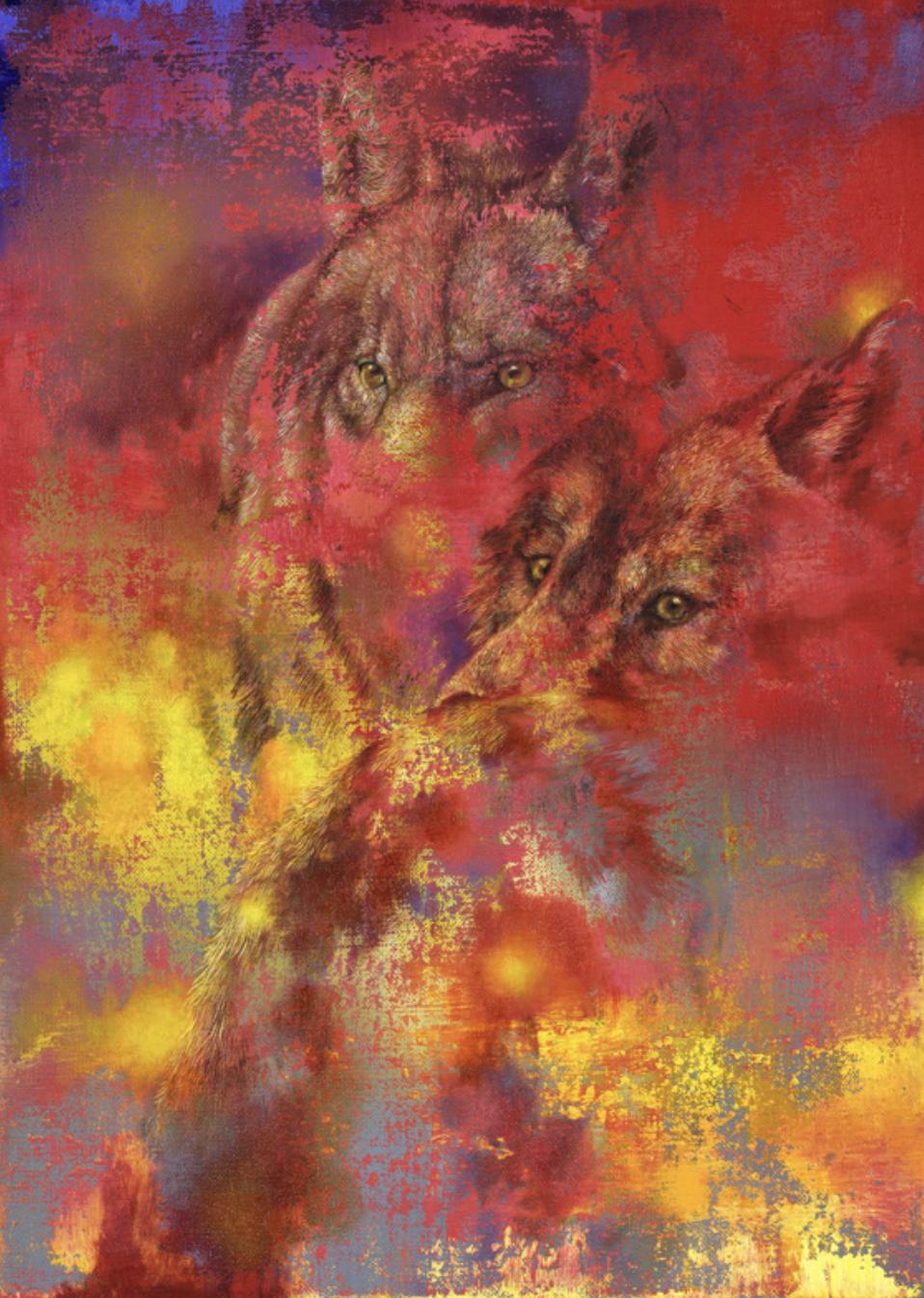
Isabelle Dutoit 's works defy hasty, unambiguous classification, as the respective compositional elements of abstraction and figuration appear too balanced for that. Instead, one should take a step back and consider the processual nature of painting, which means more than just the logical sequence of technical and creative steps. A picture is not, it becomes. This initially means preparing the painting surface. Isabelle Dutoit designs it from the surface. Layer by layer, she first applies the paint, then the motif. Mostly animals, and in some cases humans and plants, enliven the backdrop. It is remarkable that they do not enter into a narrative with each other, but rather reinforce each other in expression and effect. Only independent viewing allows them to be connected. In Drei [2025], for example, the dominant stone gray fades into frostiness across a whitewashed sequence. Out of the darkness, the wild birds appear to be in the process of landing. However, the subtle superimposition or brief glimpse of the velvety black plumage breaks the vivid scene. Whether this is a study of the movement of a single specimen or a montage of a small flock remains open to interpretation. Meanwhile, in Ducks [2025], the dynamics are reversed, with an abrupt change in color. A sunny yellow background, occasionally playing with swamp green and purple, sets the mood, over which the titled waterfowl gracefully trace their paths. For her landscape painting, Yvette Kießling draws on impressions she gains from her own observations. She attaches the greatest and most lasting significance to Tanzania, located in East Africa. Since 2016, she has visited it more than a dozen times, learning the local language Kiswahili and acquiring a deep knowledge of its history and culture.
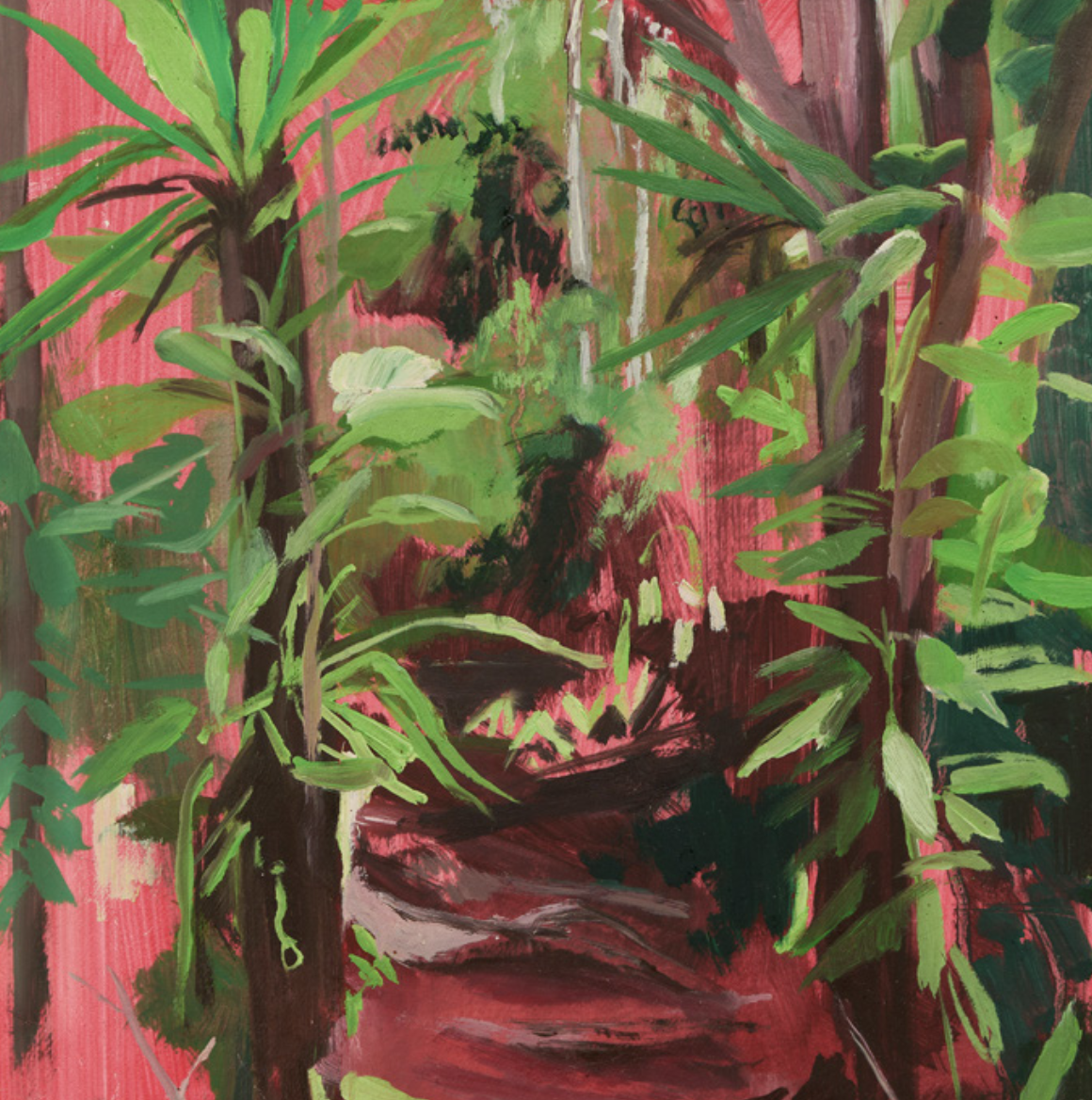
Far away from urban life, Yvette Kießling finds her motifs in natural spaces such as the Usambara Mountains. She approaches her subjects from constantly changing angles, allowing her works to unfold their impressive creative diversity. In them, she composes tropical landscapes of vibrant colors. Under a cloud-white sky, the dense foliage of a forest bathed in rich green stretches out, through which a bright magenta indicates the direction, the destination that is understood everywhere: Nija ya nyumbani, English: Way Home [2025]. Kuzama vilindini, or Sinking into the Depths [2025], follows on from this with a close-up botanical view. In captivating, shimmering shades of orange and purple, Yvette Kießling layers the characteristically shaped leaves of monstera and fern plants on top of and next to each other, blending artistic and temporal perspectives: While Tanzania's primeval forests are considered the world's richest in endemic species, they also bear witness to human influence through the cultivation of non-native plants and animals on plantations once established there. Yvette Kießling finds the perfect translation for the dynamic between origin, displacement, and adaptation of life in the dramatic contrast of intense blue and yellow tones in Giza, English: Darkness [2025].
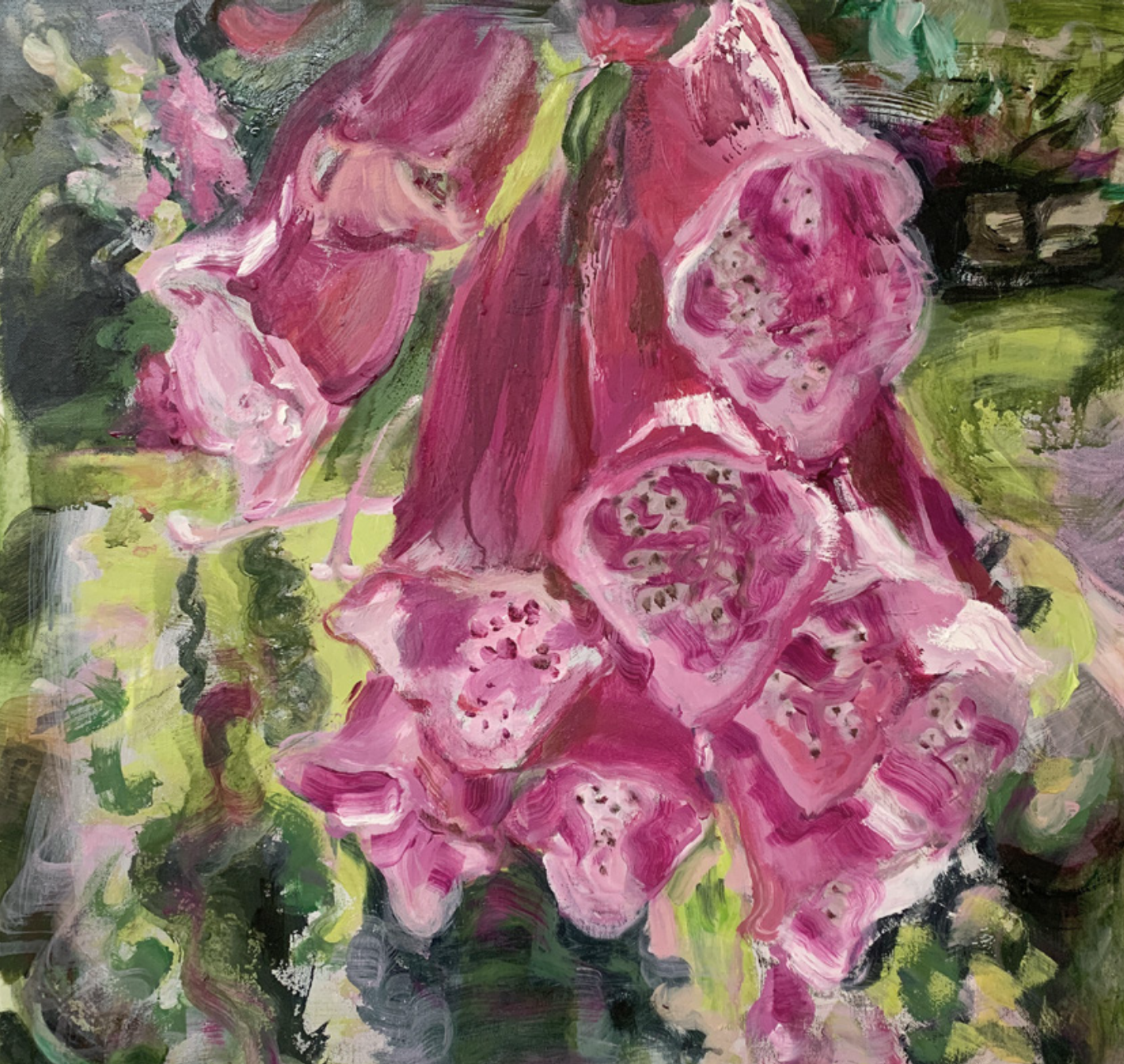
In her latest works, Tanja Selzer has developed the previously dominant theme of bacchanalia into pure nature depictions. This is to the benefit of the physicality of painting: dynamic brushstrokes recreate vegetative elements and combine them with the energy of color to form familiar topoi. In this way, since 2024, close-ups of wild flora such as Wild Foxglove and At the Wild Castle [both 2024] or Sweet Pollination [2025] have been created. These are idealized representations that reject any kind of botanical illustration or classification. Instead, they trace impressive forms and colors, provide location- and event-related descriptions of conditions, and appear protected and protective within a densely branched habitat. Tanja Selzer leaves no painterly gaps. Panoramas such as Yellow in Berlin [2025] unfold an overwhelming power, in which Tanja Selzer takes the motif of the landscape at face value and breaks through the physical and aesthetic boundaries of its depiction. On a monumental surface, she changes perspective from ground level and designs an oversized forest fire scene. One feels as if one could slip right into it and escape the hustle and bustle of the big city, insofar as there is definitely an escapist moment inherent in it. In fact, these works go back to early experiences of scenic retreats, which Tanja Selzer now uses to open up spaces of perception and resonance. [Antje Kraus]
Artist talk February 26, 2026 / 7 p.m.
The artists and Antje Kraus (art historian, Koblenz)
Galerie Leuenroth
Fahrgasse 15
60311 Frankfurt am Main
Phone: +49 175 561 76 54
E. info@galerieleuenroth.de